Scroll left
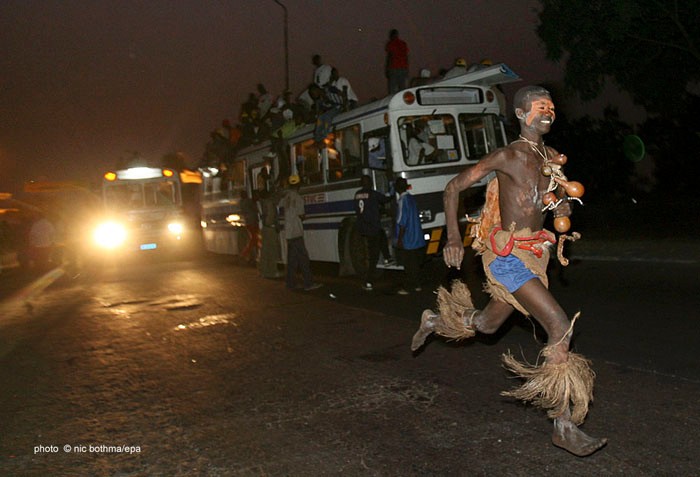
  • A Congolese supporter of presidential candidate Joseph Kabila runs down a road as others clamber into and ontop of busses and trucks departing an election rally for Joseph Kabila in Kinshasa,  Democratic Republic of Congo, Friday 28 July 2006. The DRC holds its first democratic presidential elections in 46 years on July 30 with a record number of candidates contributing to the world's largest ever ballot. Interim government president Joseph Kabila is the favorite to win the election after he took control of the interim government following the peace deal which ended the bloody 1998-2003 war, which killed an estimated 4 million people. width:700;;height:477
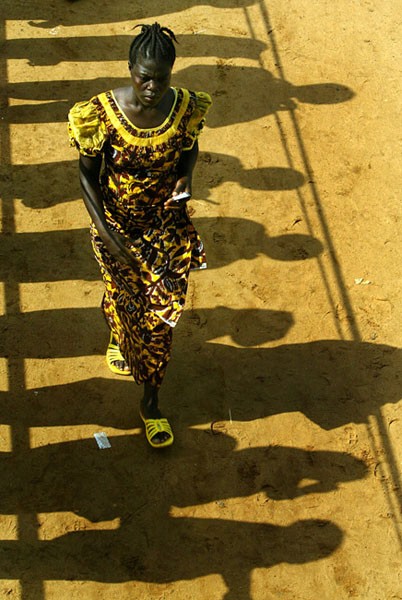
  • A Liberian woman walks to take her place in line to vote outside a polling station in Monrovia, Liberia. After 14 years of civil war the citizens of this impoverished nation head to the polls in 2005 to vote for a new president. There were 22 candidates in the running with football star George Weah and economist Ellen Johnson-Sirleaf tipped as favorites. The citizens of Monrovia, Liberia's capital, live without electricity or running water and often in overcrowded accommodation as a result of the influx of internally displaced people due to the civil war which ended with the departure of then President Charles Taylor and arrival of UN peacekeepers in 2003. Harvard graduate Ellen Johnson-Sirleaf won the election after it went into a second round run-off against George Weah. Ellen Johnson-Sirleaf thus became Africa's first ever elected president. width:402;;height:600
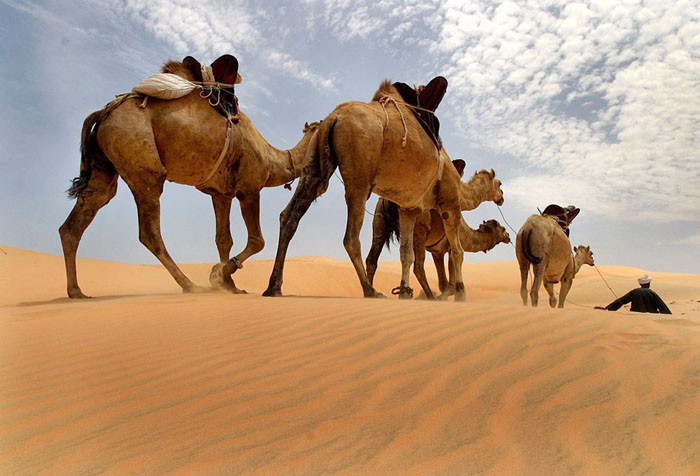
  • A Senegalese camel tender leads his camels across the sand dunes in the Lompoul desert, Western Senegal, Sunday 16 May 2004. The Lompoul Desert in Senegal is an anomaly in the mostly semi-arid environment of this part of Africa. About 15 years ago locals decided to control the encroaching vegetation around the 10 mile wide desert and thus preserve it as a tourist attraction. Today the desert attracts tourists who have the opportunity to camp in the desert only 250 kilometers north of the Capital Dakar. width:700;;height:476
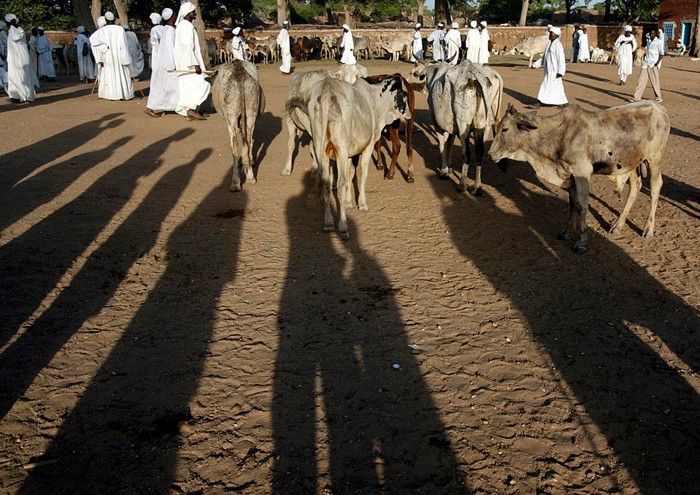
  • Sudanese men examine cattle for sale at the livestock market in Zalingei, Western Darfur, Sudan on Thursday 14 October 2004. The area around Zalingei is considered strategically important in Darfur owing to its agriculture and livestock. Fighting continues there between rebel SLA and government forces.  width:700;;height:495
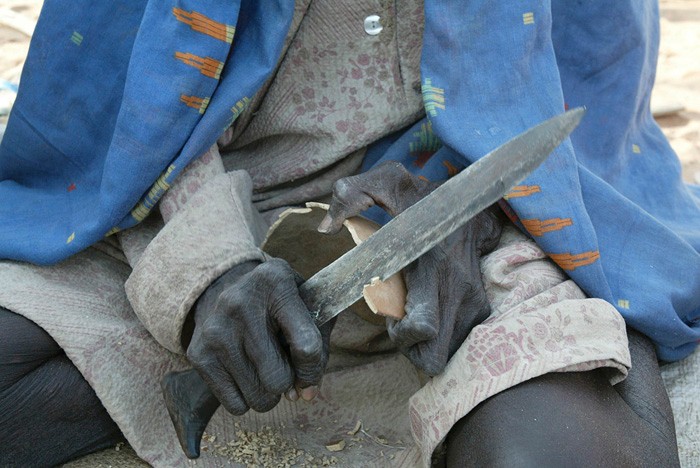
  • A Sudanese Internally Displaced (IDP) woman cuts with a home-made knife in Muhajiriyah IDP camp, home to more than 40 000 refugees in Darfur, Sudan 21 October 2004. Speaking on Sunday 07 May 2006, Jan Egeland, the UN's top humanitarian official, said it is vital that UN peacekeepers are allowed into Sudan's Darfur region to assist in ending the humanitarian crisis. This as he begins a tour to Darfur to assess conditions there and in refugee camps in neighbouring Chad.The government of Sudan and the main Darfur rebel faction, the SLA, signed a peace agreement in Abuja, Nigeria on Friday 06 May 2006 after weeks of intense negotiations hoping to end the three years of fighting which has killed about 200,000 and  left about two million homeless.  width:700;;height:468
  • A bee takes off from an indigenous coastal Fynbos flower on the foothills of the Table Mountain National park world heritage site Cape Town, South Africa, Thursday 26 October 2006. Situated at the southwestern tip of Africa, the Table Mountain National Park is part of the Cape Floristic Region World Heritage Site. The Park is recognised globally for its extraordinarily rich, diverse and unique fauna and flora. With rugged cliffs, steep slopes and sandy flats it is a  natural, scenic, historical, cultural and recreational asset both locally and internationally. Nowhere else in the world does an area of such rich bio-diversity exist almost entirely within a metropolitan area. width:700;;height:489
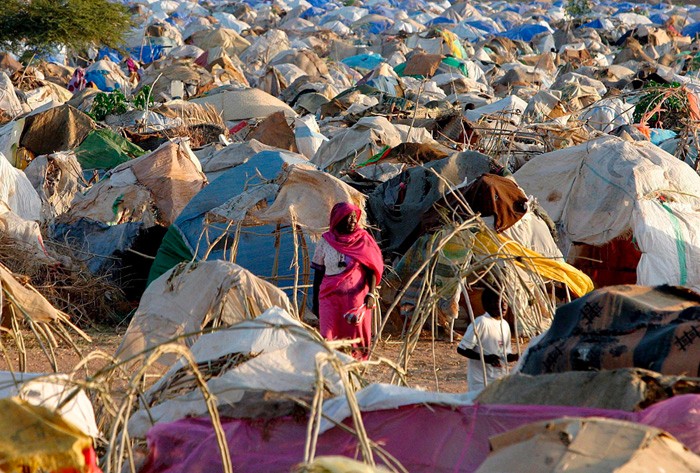
  • Sudanese IDP's (internally displaced people) in the over-crowded Asilef camp near Nyala, South Darfur, Sudan Tuesday 19 October 2004. Ending months of a tug-of-war with Sudan, the UN Security Council authorized Tuesday 31 July 2007 the deployment of more than 20,000 UN and African Union troops to the war-torn Darfur region. width:700;;height:473
  • Wild flowers surround a thorn bush in the Namaqualand plains of Nieuwoudtville, Northern Cape, South Africa, 17 August 2010. The Namaqualand spring flowers are world famous. Namaqualand is a semi-desert environment, however in the spring (July to September) depending on the rains which soak into the earth, millions upon millions of flowers emerge in a phenomenal explosion of colour unrivaled anywhere on earth. width:700;;height:467

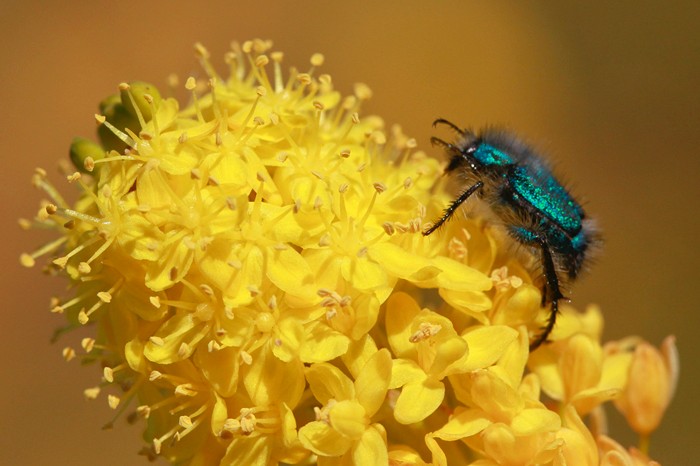
  • A Blue Monkey beetle crawls on a Yellow Bulbinella flower in the Namaqualand plains of Nieuwoudtville, Northern Cape, South Africa, 17 August 2010.  The Namaqualand spring flowers are world famous. Namaqualand is a semi-desert environment, however in the spring (July to September) depending on the rains which soak into the earth, millions upon millions of flowers emerge in a phenomenal explosion of colour unrivaled anywhere on earth. width:700;;height:466
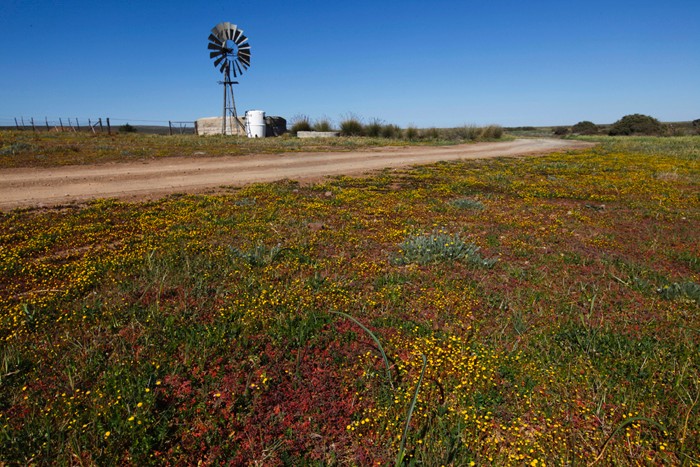
  • Wild flowers grow along a road past a wind pump in the Namaqualand plains of Nieuwoudtville, Northern Cape, South Africa, 17 August 2010. The 2010 season has been one of the driest seasons in five years and has produced only a fraction of the usual number of wild flowers usually seen during this period. Most of the flowers belong to the different species of daisies. The Namaqua National Park was established to protect this unique phenomenon.  width:700;;height:467
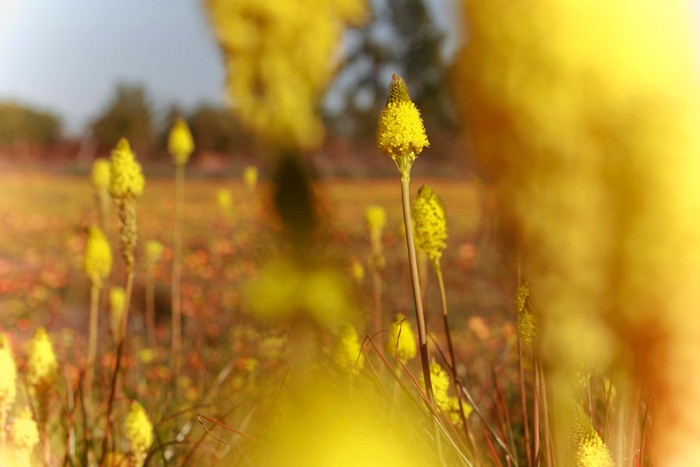
  • Yellow Bulbinella flowers in the Namaqualand plains of Nieuwoudtville, Northern Cape, South Africa, 17 August 2010. The 2010 season has been one of the driest seasons in five years and has produced only a fraction of the usual number of wild flowers usually seen during this period. Most of the flowers belong to the different species of daisies. The Namaqua National Park was established to protect this unique phenomenon. width:700;;height:467
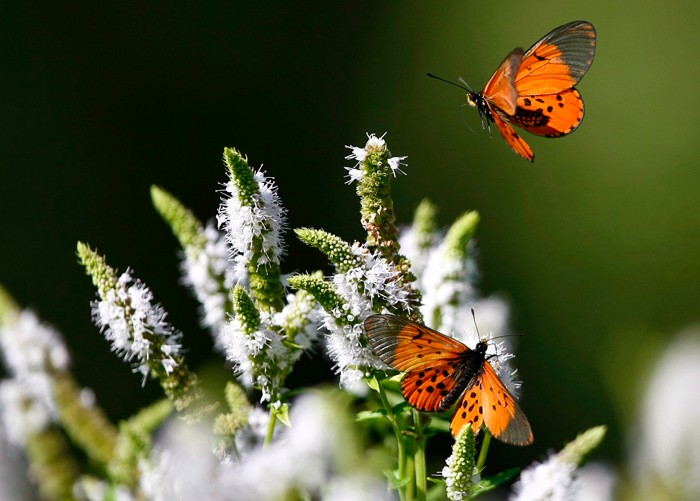
  • Acraea butterflies collect nectar from mint flowers in a valley of the Table Mountain in Cape Town, South Africa.  width:700;;height:501
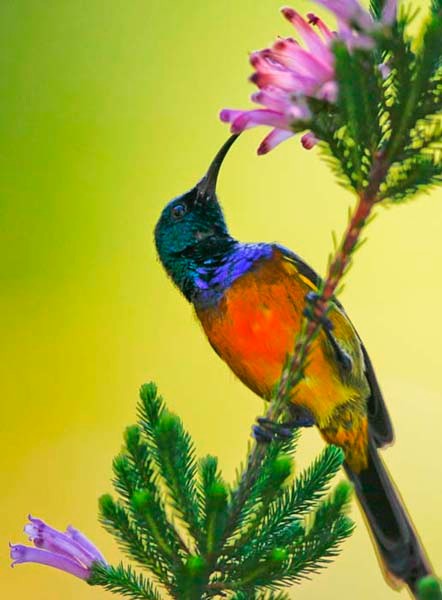
  • An Orange breasted Sunbird ( Anthobaphes violacea ) sucks nectar from an Erica flower in a valley of the Table Mountain National Park in Cape Town, South Africa 14 February 2011. This sunbird is endemic to the fynbos habitat of southwestern South Africa. Situated at the southwestern tip of Africa, the Table Mountain National Park is part of the Cape Floristic Region World Heritage Site. The Park is recognised globally for its extraordinarily rich, diverse and unique fauna and flora. Nowhere else in the world does an area of such rich bio-diversity exist almost entirely within a metropolitan area. width:442;;height:600
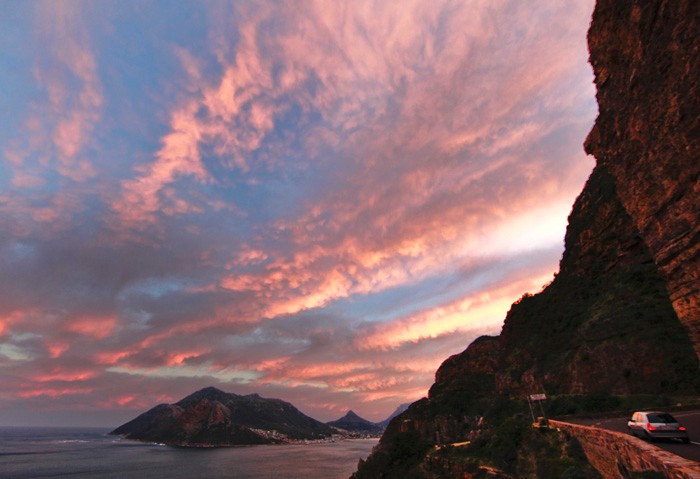
  • A vehicle driving at sunrise along Chapmans Peak part of the Table Mountain National Park in Cape Town, South Africa, 02 August 2011. Table Mountain has been named among the world‚◊?s new seven wonders of nature, according to provisional results from a global competition on 11 November 2011. width:700;;height:479
  • Sunrise above the coastal Fynbos mountains of the Table Mountain National park world heritage site in Cape Town, South Africa. Table Mountain has been named among the world?s new seven wonders of nature, according to provisional results from a global competition on 11 November 2011. Winners will be confirmed in a recount and the official inauguration will take place in early 2012. width:700;;height:467
  • One month old South African Tortoise with two heads is held between the fingers of Noel Daniels of Wellington, who discovered it in the Western Cape 26 May 2003. Tortoise expert Dr Ernst Baard of the Cape Nature Conservation says two-headed tortoises are extreemly rare and might be the product of a genetic deviation during the development of the embryo. width:700;;height:511
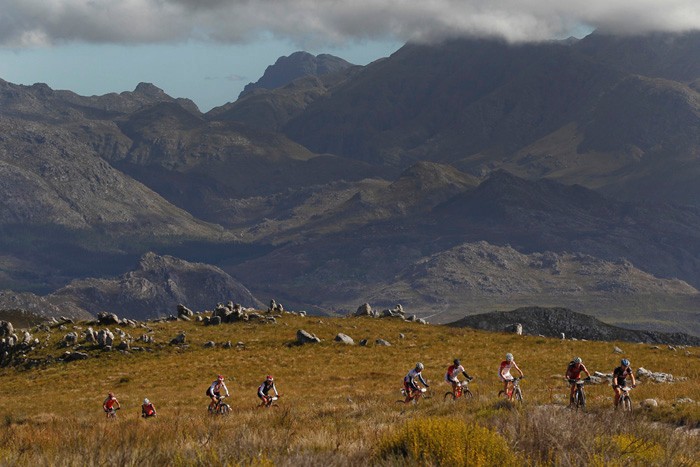
  • Cyclists climb through a mountain range during stage 6 the penultimate stage in the Absa Cape Epic mountain bike team stage race in Oak Valley, South Africa, 31 March 2012. The Cape Epic is the premier multi day stage race in the world and sees 1200 cyclists riding in pairs over 780km and climbing more than16300 meters, twice the high of Mount Everest over 8 days of racing. width:700;;height:467
Scroll right